Wednesday, December 7, 2016

Stretches for Plantar Fasciitis

How to Stretch your Plantar Fasciitis?


Here are some tips from Dr. Kevin McDonald our InStride Family Foot Care podiatrist:


For additional questions, please contact our InStride Family Foot Care at 704 -786-4482 or visit at http://www.familyfootcare.info/


Monday, October 31, 2016

Medical Pedicures


Medical Pedicures from Officite on Vimeo.


If you have any questions regarding to your feet, please do not hesitate to contact our InStride Family Foot Care at 704-786-4482. 


Wednesday, October 12, 2016

Women's Feet


Women’s Feet from Officite on Vimeo.


If you have any questions regarding to your feet, please do not hesitate to contact our InStride Family Foot Care at 704-786-4482.


Thursday, September 15, 2016

Corns

Corns are calluses that form on the toes because of bones that push up against shoes and build up pressure on the skin. The surface layer of the skin thickens, irritating the tissues underneath. 

Hard corns are usually located on the top of the toe or on the side of the small toe.
Soft corns resemble open sores and develop between the toes as they rub against each other.

Improperly fitting shoes are a leading cause of corns. Toe deformities, such as hammertoe or claw toe, also can lead to corns. 

Self-care for corns includes soaking feet regularly and using a pumice stone or callus file to reduce the size of the corn. Special over-the-counter, non-medicated, donut-shaped foam pads can be worn to help relieve the pressure and discomfort. For large or lasting corns, please contact our InStride Family Foot Care at 704 -786-4482. We can shave off the corns to help your feet feel and look better.


Image Credits to Healthwise


Monday, August 8, 2016

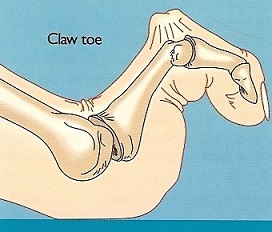
Claw Toe


Image credit to orthosurgeon.co.za
Claw toe is caused by nerve damage from diseases like diabetes or alcoholism, which can weaken muscles in the foot. The term stems from the toes' appearance—toes that look like claws digging down into the soles. Claw toe may lead to the formation of painful calluses. Claw toe worsens without treatment and may become a permanent deformity over time.

Common symptoms of claw toe include:
  • Toes bent upward from the joints at the ball of the foot.
  • Toes bent downward at the middle joints toward the sole of the shoe.
  • Corns on the top of the toe or under the ball of the foot.
Claw toe deformities are easier to repair when detected early. Splints or tape is used to hold the toes in correct position.


For additional questions, contact our InStride Family Foot Care at 704 -786-4482 or visit at http://www.familyfootcare.info/.


Wednesday, July 13, 2016

Sturdy Shoes


What type of shoes should we wear when having pain on the bottom of foot?

Dr. McDonald has an answer for that! Check out his video clip below! 


For additional questions, contact our InStride Family Foot Care at 704 -786-4482 or visit at http://www.familyfootcare.info/


Tuesday, June 21, 2016

Metatarsalgia (foot pain in ball)

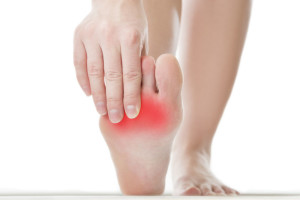
Pain in the area between the arch and toes, or ball of the foot, is generally called metatarsalgia. 
The pain usually centers on one or more of the five bones (metatarsals) in this mid-portion of the foot. Also known as dropped metatarsal heads, metatarsalgia can cause abnormal weight distribution due to overpronation.
Metatarsalgia occurs when one of the metatarsal joints becomes painful or inflamed. People often develop a callus under the affected joint. Metatarsalgia also can be caused by arthritis, foot injury (from sports, a car accident, or repeated stress), hard surfaces (cement or tile floors), and specific footwear (rigid-soled work boots).

A simple change of shoes may solve the problem. In more severe cases, custom orthotics may be prescribed to alleviate the pain and prevent overpronation.


For additional questions, contact our InStride Family Foot Care at 704 -786-4482 or visit at http://www.familyfootcare.info/.